




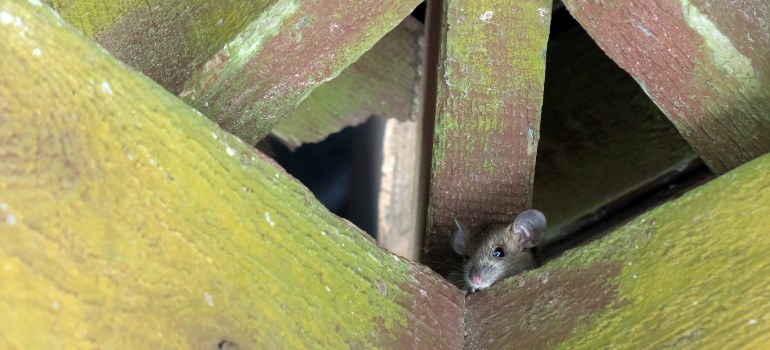
Scratching sounds, tapping, scurrying — unfamiliar noises from your attic are worth taking seriously. Rodents and wildlife move into lofts more often than most homeowners realise, and knowing how to tell what kind of animal is in your attic is the first step to dealing with it properly.
Lofts are genuinely attractive to squirrels and other rodents. Warm, sheltered, and usually undisturbed — it’s everything they want. The problem is they don’t stay quiet or tidy. Rodents gnaw on stored items and chew through electrical cabling, which is a real fire risk.
So in this article, you will find information on how to properly identify the animal in your attic, based on the noises coming from the ceiling and the other signs they leave behind.
TL;DR
- The most common attic animals in UK homes are rats, mice, squirrels, birds, bats, and wasps.
- Squirrels are typically heard in the early morning; rats and mice are more active at night.
- Tapping or loud scratching sounds in the loft in the early morning strongly suggest grey squirrels.
- Rat droppings are dark, tapered, and roughly 12mm long; squirrel droppings are larger, rounded, and pale.
- Bats are legally protected in the UK — never attempt to remove or disturb them; contact the Bat Conservation Trust.
- Wasps in the loft produce a low hum or buzzing, typically in spring and summer.
- If you can’t identify the animal, set a trail camera or call a professional pest inspector before attempting removal.
Table of Contents
What is the most common pest in the loft?
Rats and mice are the most common animals found in UK lofts, drawn by warmth and shelter. Grey squirrels are the next most frequent, followed by birds (especially pigeons), wasps, and occasionally bats.
Rodents are attracted to lofts as they provide a warm and safe place to nest and can easily access food sources in the home. However, they can cause significant damage to the loft and the items stored in it and pose a health risk due to the bacteria and diseases they carry. It’s important to take prompt action if you suspect a rodent infestation in your loft, as they can reproduce quickly and become a serious problem if left unchecked.
Squirrels, birds and wasps are also common unwelcome visitors to attics in the UK.
Check also: What Looks Like Mouse Poop but Isn’t
Rat or mouse? Find out fast
Droppings, scratching, the odd dash across the floor — but which rodent is it? Answer five quick questions and we’ll tell you what you’re dealing with, how serious it is, and whether to DIY or call a pro.
1. What do the droppings look like?
The single biggest giveaway. Pick the closest.
2. Where are the signs?
Where you’ve seen droppings, damage or the animal itself.
3. What can you hear?
Sounds — and when you hear them — say a lot.
4. If you’ve seen it — how big?
A rough size helps separate mouse from rat from squirrel.
5. Any gnaw or chew marks?
On food packets, skirting, cables, wood or pipes.
How bad is it?
What to do
- Seal food in hard containers and clear crumbs nightly.
- Block gaps — rodents get through holes the size of a pencil (mice) or a thumb (rats).
- Clear clutter, log piles and decking voids where they nest.
- Don’t scatter shop-bought poison near pets or children.
- Don’t ignore it — a pair becomes a colony in weeks.
- Don’t just clear droppings without sealing the way in.
Get it confirmed & cleared
Our technicians identify the rodent, treat it properly and proof your home so it stays gone — across London, 24/7.
This checker offers guidance based on common signs, not a guaranteed diagnosis — rats, mice and squirrels can share similar signs. For confirmation, book a professional inspection. Not medical advice.
What animals live in attics in the UK?
Remember, it’s essential to identify the animal before taking any action. If you’re unsure, it’s always best to seek the help of a professional pest removal service.
These are some of the most common animals found in attics in the UK and the signs that can help identify them:
Birds
Birds are easily identifiable by their frantic flapping, tweeting sounds, and chirping during the day. This is a clear indication of the bird’s presence. Birds may make noise in your attic while building nests or roosting. The number of pigeons in people’s attics increases every year.
Check also: Pigeon Nest – Removal and Life Cycle of Pigeons
Squirrels
Grey squirrels in the loft are most active from dawn through to mid-morning. If you’re hearing rapid, frantic scratching or tapping sounds early in the morning, squirrels are the most likely culprit. You may also hear rolling sounds — that’s stored nuts moving across the joists — and occasional chattering. Activity tends to drop off significantly by mid-morning and picks up briefly again in the evening.
Beyond sound, squirrels leave behind a clear set of physical signs. Their droppings are roughly 8–12mm long, cylindrical, and pale brown or light-coloured — noticeably different from the darker, more tapered droppings of rats. Check the fascia boards and roof timber for gnaw marks, and look for gaps around roof tiles or soffits where they’ve forced an entry point. Inside the loft, squirrels build nests from leaves, shredded insulation, and other soft material — if you find a dense pile of this kind of debris, that’s where they’ve settled.
Squirrels possess a destructive habit of chewing on anything, including the wooden structures in the attic and electrical wiring, which can cause severe damage. Don’t ignore them — the longer they’re left, the worse the damage gets.
A squirrel can also carry fleas and mites, so don’t let them roam your home freely. Call an expert as soon as you notice them to get rid of squirrels in the attic.
Learn all about How to Get Rid of Grey Squirrels in Loft or Attic
Rats
Rats are primarily nocturnal, so scratching, gnawing, and scurrying sounds at night are the first thing to listen for. They gnaw louder than mice — a heavy, persistent sound rather than the light nibbling of a mouse — and you may hear them moving along a fixed route, which is typical rat behaviour.
The physical signs of rats in a loft are fairly distinctive once you know what to look for. Droppings are dark brown or black, tapered at one end, and roughly 12mm long. You’ll often find greasy smear marks along joists or walls where rats repeatedly travel the same path — the grease comes from their fur. Look also for shredded insulation, cardboard, or other soft material gathered into a nest. Entry points tend to be gaps around pipes, damaged soffits, or holes in the eaves.
Rats can infiltrate most spaces and seek shelter in cavity walls and loft insulation. You will likely hear scratching concentrated in a particular area if multiple rats have taken up residence. When trying to locate the noise source, tapping into the area may cause them to remain silent and relocate to another part of the attic. It’s best if you take action and get rid of rats in the attic as promptly as possible in order to avoid further damage.
Check also: How to Keep Rats Out of the Garage
Mice
Mice are nocturnal and much lighter than rats, so you’ll hear light scratching or nibbling at night rather than the heavier sounds rats produce. Their droppings are smaller too — around 3–6mm, rod-shaped, and scattered rather than concentrated. Learn What Are The Signs of a Mouse Infestation.
You’ll need to find the entry points they used to get into your attic so that you can cover them. Due to their ability to find their way into tiny gaps, including vents and pipes, you will need to be thorough. Mice in the loft should be treated quickly to prevent a large mice infestation, as they breed rapidly.
Read more about How to Get Rid of Mice in Your House
Insects
A large wasp nest in your attic may produce a humming sound. Lofts are perfect places for wasp nests in the spring and summer. These nests can be as big as a football, and you may hear a dull buzzing sound if you get too close.
You should not approach or threaten them, especially if you have allergies. If feeling threatened, they can sting multiple times. Hence, it might be best to seek professional help to safely and effectively remove wasp nests.
Check also: Bees vs. Hornets vs. Wasps: What’s the Difference?
Bats
Even though bats are silent flyers, they can sometimes be heard in your attic. It is typically when one or more bats become trapped in your attic that the sounds become more prominent. If the bats try to move through insulation, you may hear their wings flapping. Additionally, bats will make high-pitch-chirping sounds.
If you have discovered bats in your attic, do not try to kill these animals. It is important to note that bats are a protected and endangered species, and it is illegal to harm them. Whenever bats are roosting in your attic, you should consult the Bat Conservation Trust before performing any treatment.
You may hear noises in your attic if you live in an older home or in an area with wildlife. However, if there is a persistent, loud noise or other signs of a problem like droppings or structural damage, then there may be an animal or pest infestation in your attic. Ideally, you could contact a professional pest control company to inspect your property and identify the source of the noise in the attic.
Check also: Sneaky Winter Pests to Look Out For
How to tell what kind of animal is in your attic
You identify the animal by combining four things: when you hear it, what it sounds like, what droppings it leaves, and what physical damage you can find. No single clue is definitive on its own — but two or three pointing in the same direction is usually enough to narrow it down reliably.
How to identify which animal is living in your attic using sound, droppings, damage, tracks, and camera evidence.
Listen for sounds and timing
Different animals make distinct sounds and are active at different times of day. Scratching, gnawing, and scampering sounds are commonly associated with rodents like rats and mice, while tapping, chattering, and frantic scratching sounds — especially in the early morning — may indicate squirrels. Note the time of day carefully: it is one of the most reliable clues. More on specific sounds in the next section.
Check for droppings
Animal droppings provide some of the most reliable identification evidence. Rat droppings are dark brown or black, tapered at one end, and roughly 12mm long. Squirrel droppings are larger, rounded, and pale brown. Mouse droppings are much smaller — around 3–6mm, rod-shaped. Location matters too: concentrated droppings in one area often indicate where the animal is nesting.
Inspect for damage
Different animals cause different kinds of damage. Rodents chew on wires and insulation, which can create a genuine fire hazard. Squirrels gnaw on wooden beams and fascia boards. Look also for shredded insulation or nesting material, which tells you the animal has settled in rather than just passed through.
Look for tracks
Check the dust or insulation in your attic for footprints. Rodents have four toes on their front feet and five on their back, while squirrels have five toes on all four feet. Fresh tracks in disturbed insulation are a good sign the animal is currently active.
Set a trail camera
If you’re still unsure after checking for sounds, droppings, damage, and tracks, set up a trail camera pointed at the area where activity seems highest. Even a single night of footage will usually confirm the species. If you’d rather not do this yourself, a professional pest inspector can identify the animal from the evidence available.
Prompt investigation of unusual noises is essential, as nests and droppings can provide a breeding ground for insects that may carry harmful diseases into your home.
What time of day is the animal active?
Timing is one of the quickest ways to narrow down what you’re dealing with. Use this as a first filter before looking for any other evidence.
| Typical active hours | Characteristic sound | |
|---|---|---|
| Grey squirrel | Early morning (dawn to mid-morning), some daytime | Rapid, frantic scratching and tapping; rolling sounds (stored nuts); occasional chattering |
| Rat | Primarily night, some daytime activity | Loud scratching and gnawing; scurrying along joists; heavier than mice |
| Mouse | Night | Light scratching and nibbling; faint squeaking |
| Bird | Daytime | Flapping, tweeting, chirping |
| Wasp | Daytime (spring and summer) | Low hum or dull buzzing near nest |
| Bat | Dusk and night | Wings flapping; high-pitched chirping |
Takeaways
- Noise from your attic that is unfamiliar may indicate rodents or other wildlife living there;
- You can identify invaders by inspecting your attic for droppings, evidence of nesting, and signs of gnawing;
- You should identify the type of animal before taking any action;
- Bats in your attic should be reported to the organisation responsible for their protection and not killed;
- Grey squirrels are the most likely cause of early-morning tapping or scratching sounds in your loft;
- Droppings’ size and shape (rat vs mouse vs squirrel) are one of the most reliable ways to confirm which animal is present.
Image source: Shutterstock / IrinaK



Got a rat in the loft